
“Best” ecommerce website means one thing: it sells with fewer clicks
In New York, we see a lot of ecommerce owners overpay for “design” and still lose sales because the basics weren’t done: navigation that makes sense, pages that answer objections, and checkout that doesn’t fight the customer. The best website for ecommerce is the one that gets a shopper from ad or search to purchase without confusion, lag, or missing info.
Our New York hub builds stores for brands shipping across the U.S., and we also rescue projects that got stuck between a template and a custom build. If you’re choosing a platform, the big question isn’t “Shopify or WordPress?” It’s: how are you going to acquire customers and how many moving parts can your team actually manage each week?
If you want a quick overview of what we ship and where we fit, start here: BrandJunction’s United States team in New York.
How we choose the best website for ecommerce (platform first, not vibes)
Most quotes we see in New York are backwards: they start with mockups, then pick a platform later. We do the opposite. Platform determines your checkout, your inventory workflows, your reporting, and what features will cost you time every month.
Here’s the practical way we decide what’s the best website for ecommerce for a specific NYC business.
1) If you’re selling physical products and want speed to market
We usually recommend Shopify. It’s hard to beat for stable checkout, payments, shipping apps, and not needing a full-time developer to keep the store healthy. For many New York brands (jewelry in the Diamond District, DTC skincare in Williamsburg, specialty foods in Astoria), Shopify gets you selling faster with fewer surprises.
We built IcedJewelz.com as a Shopify store and saw mobile conversion double after the rebuild. That project shipped in 15 days with a focus on product page clarity and faster mobile UX. If you want the specifics, here’s the write-up: IcedJewelz Shopify rebuild case study.
2) If content + SEO is the main growth engine
If your growth plan is heavy on SEO content (guides, comparisons, long-tail category pages), WordPress + WooCommerce can work well, especially when the store is simple and you need editorial flexibility. We’ve also seen brands run Shopify for commerce and a separate content layer (Next.js/Astro) for speed and structured SEO pages.
One caution: WooCommerce can become a plugin pile. If you need subscriptions, bundles, multi-currency, advanced shipping rules, and custom product builders, Shopify may still be cleaner long-term, even if WordPress feels familiar.
3) If you need custom workflows or you’re building a catalog “engine”
When the store is really an application—custom quoting, role-based pricing, complex vendor onboarding, ERP syncs—then Laravel or .NET starts making sense, often with a React/Next frontend. That’s not the fastest path, but it can be the best website for ecommerce when your business model doesn’t fit the usual boxes.
If you’re in this bucket and you also need a companion app for sales reps or customers, that’s when we bring in Flutter or native mobile. See what that path looks like here: application development for US businesses.
What New York shoppers expect (and what breaks conversions)
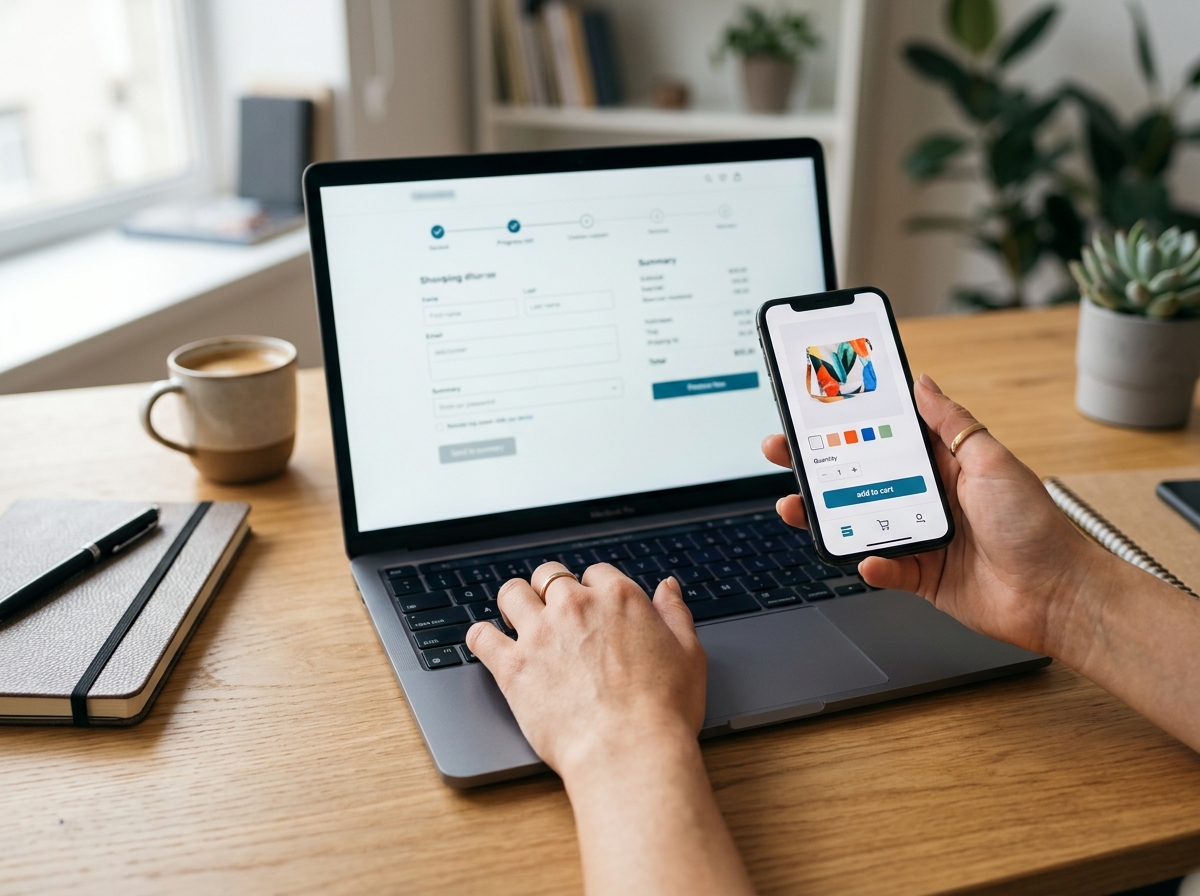
NYC customers are impatient. They’re buying on the subway, in an elevator, between meetings. The “best website for ecommerce” in New York is brutally optimized for mobile and speed, and it answers key questions without making users hunt.
Here are the conversion killers we fix most often:
- Slow product pages: heavy images, unoptimized scripts, and theme add-ons that drag load time. Teabox’s revamp cut load time by 58% and conversions rose 31% after we cleaned up performance and page structure.
- Weak product information: missing sizing, materials, shipping times, returns, and care info. In categories like jewelry or apparel, this is where refunds start.
- Confusing variants: color/size/finish options that feel like a puzzle on mobile, especially when the theme hides the real selected option.
- Overdesigned navigation: “creative” menus that bury categories. A shopper should reach a category in one tap and a best-seller in two.
Teabox is a good reference when performance and conversion are the mission. Here’s that project: Teabox speed and conversion revamp.
The build plan we use for ecommerce sites that need results in weeks
We ship on tight timelines because ecommerce doesn’t wait. A delayed launch can mean missing a seasonal drop, a creator collab, or a paid campaign window.
Our delivery baselines are simple:
- Starter website: 10 days
- Professional website: 3–4 weeks
Every build includes 4 months of free maintenance, because the first 120 days is when you’re fixing edge cases: a shipping rule that behaves oddly, a discount stacking issue, or a theme update that needs care.
If you want to see the exact USD tiers we quote from the New York office, use this page: website pricing in USD.
What “Starter” actually means for ecommerce
At $299, a Starter website isn’t a giant custom store. It’s the tight, launch-ready version: a clean theme setup, core pages, basic product structure, and the must-have tracking so you can see what’s working.
In New York, this is common for pop-ups going permanent, brands moving off Instagram-only selling, and early-stage founders who need a credible store before they spend on ads.
What “Professional” adds (and why most NYC stores land here)
At $549, Professional is where we can address the things that actually move conversion: homepage merchandising rules, collection logic, stronger product page layout, performance cleanup, and the content structure needed for SEO landing pages.
It’s also where we can properly handle integrations like Klaviyo-style email flows, review tools, and better analytics events (so your ads optimize on real purchase intent, not just page views).
When “Enterprise” becomes the cheaper option
Enterprise website builds start at $1,200. This is for stores that need custom sections, complex catalog logic, headless builds (React/Next or Astro), or backend work that goes beyond theme configuration. It’s also common when a New York brand needs multiple storefronts, wholesale gating, or unique shipping logic.
For a deeper look at how we approach ecommerce website development here, see: Website Development services in the United States.
Shopify vs WordPress vs headless: a decision table we use in proposals
Clients ask us to pick a side. We don’t. We pick the path that fits your acquisition channel, catalog complexity, and team capacity.
| Need | Best fit | Why it wins in practice |
|---|---|---|
| Fast launch, stable checkout, app ecosystem | Shopify | Less maintenance, fewer breakages, easier for non-dev teams to run weekly. |
| Content-heavy SEO site with basic commerce | WordPress + WooCommerce | Editorial workflow is strong; better for long guides and publishing cadence. |
| Performance-first storefront with custom UX | Headless (Next.js/Astro + Shopify/Laravel) | Great speed and flexibility, but needs disciplined development and ongoing care. |
| Complex business logic (quotes, roles, pricing rules) | Laravel or .NET | You’re building a system, not just pages; custom workflows pay for themselves. |
If you’re stuck between Shopify and “we should custom build everything,” we’ll usually recommend Shopify first, then headless only when there’s a measurable reason: speed at scale, a unique product configurator, or SEO landing pages that need a different architecture.
Traffic is part of the “best website for ecommerce” decision
A store that looks good but doesn’t acquire customers isn’t the best anything. New York brands tend to run mixed channels: Meta/Google ads, organic search, influencer traffic, and email/SMS.
We’ve seen SEO be the long-term stabilizer, especially after ad costs spike. TheIceLane went from 0 to 9,000 monthly sessions in 6 months with Shopify + SEO work—clean site structure, collection targeting, and content built around purchase-intent keywords.
If organic search is on your plan, don’t bolt it on later. Build the site so it can rank: crawlable collections, sane filters, internal links, schema, and fast templates. Our US SEO work lives here: SEO services for US ecommerce brands.
And if you’re planning a launch, a collab, or a “New York brand goes national” moment, PR can be a real accelerant. We’ve placed releases on outlets like Yahoo Finance, AP News, MarketWatch, Benzinga, Business Insider, and Digital Journal. Details are here: press release and PR services.
What to ask a New York agency before you sign (so you don’t buy a headache)
When someone tells you they’ll build the best website for ecommerce, ask questions that force specifics. The answers will tell you if you’re getting a real build or a theme flip.
- What’s included in the first 10 days or first 4 weeks? You want deliverables: pages, templates, tracking, speed work, not “design.”
- How will you handle product migration? SKUs, variants, images, collections, redirects, and metadata—this is where launches slip.
- What’s your performance budget? Ask for a target on mobile load and what they’ll do to hit it (image sizing, script audits, fewer apps).
- Who owns analytics? GA4 events, Meta pixel, Google Ads conversions, and server-side tracking plans if needed.
- What happens after launch? Get it in writing: maintenance window, response times, and what’s covered.
We support the US region Mon–Fri, 9am–6pm EST from our New York office. If you want a quick platform recommendation and a realistic quote based on your catalog size and channel plan, use: request a free ecommerce consultation.
If you’re comparing options this week, send us your store link (or your product list if you’re pre-launch), your target launch date, and where your traffic will come from. We’ll tell you which build is the best website for ecommerce for your situation, and what it would take to ship it on time.

Your digital growth partner in United States
BrandJunction’s United States team builds high-performance websites, mobile apps and SEO campaigns for businesses across United States — priced in USD, supported in your time zone.